Python for DevOps: An Ultimate Guide for DevOps Engineer
Let's explore Python for DevOps: Practical Guide covering Python basics, automation with Python, Python DevOps Tools and Frameworks.
Kashyap Merai / / devops · 5 min read
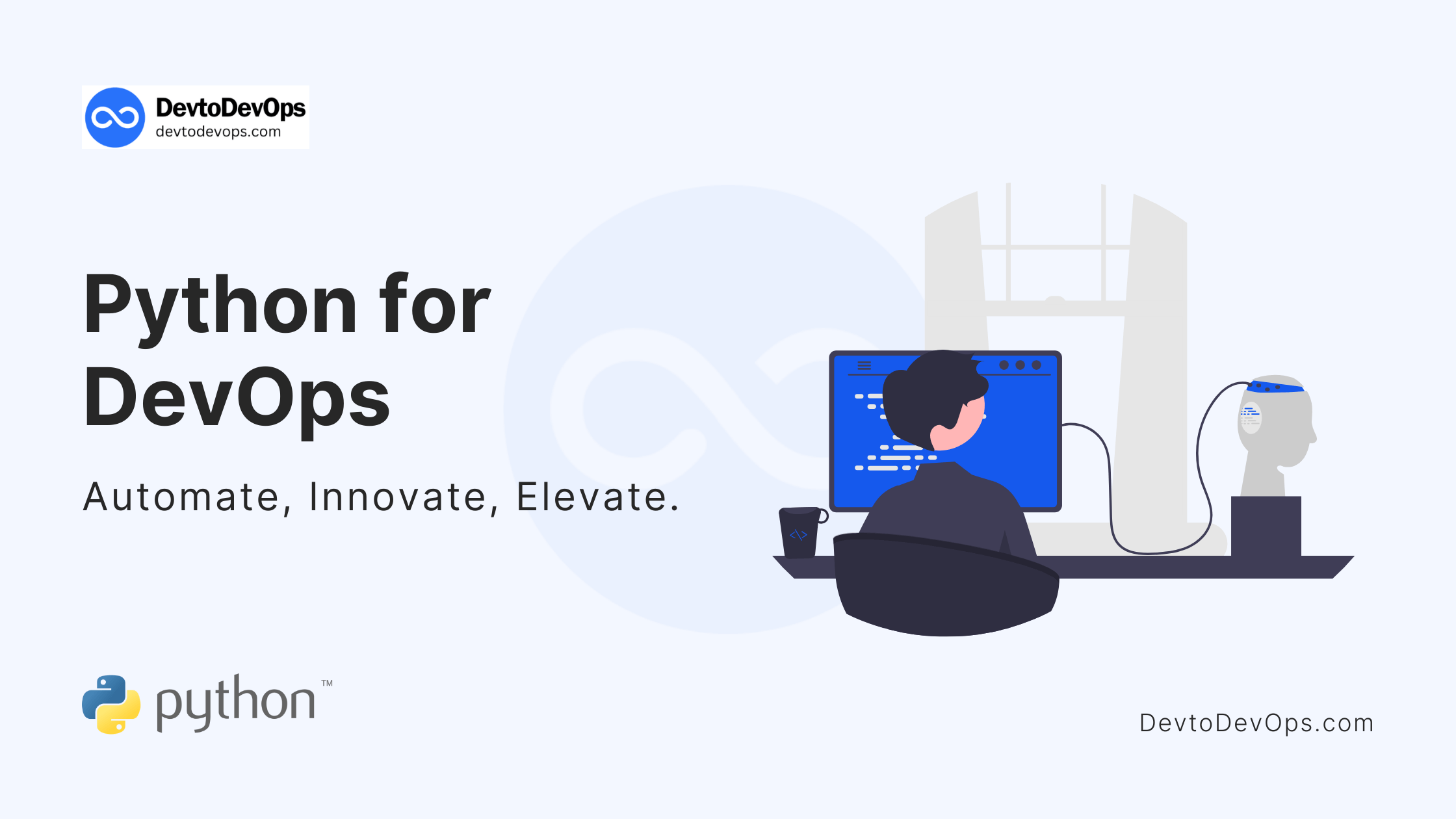
Let’s explore Python for DevOps: Practical Guide covering Python basics, automation with Python, Python DevOps Tools and Frameworks, and additional learning resources.
Why Python for a DevOps Engineer is an excellent choice?
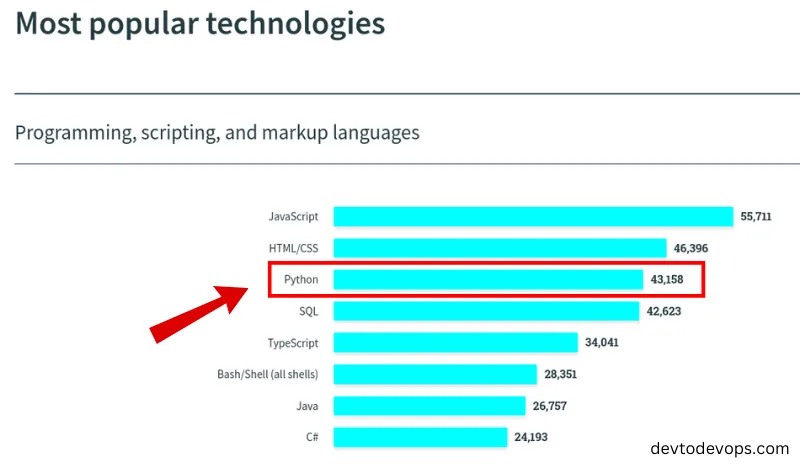
Python is the most popular language for DevOps; it’s an easy-to-learn language, even for a beginner. It follows the simple English-like syntax, making it simple and readable.
Python provides comprehensive tools that make DevOps tasks like writing automation scripts, setting infrastructure, and configuring the servers very efficient.
The latest Developer Survey 2023 by Stack Overflow shows that 49.28% of respondents use Python for Programming and Scripting.
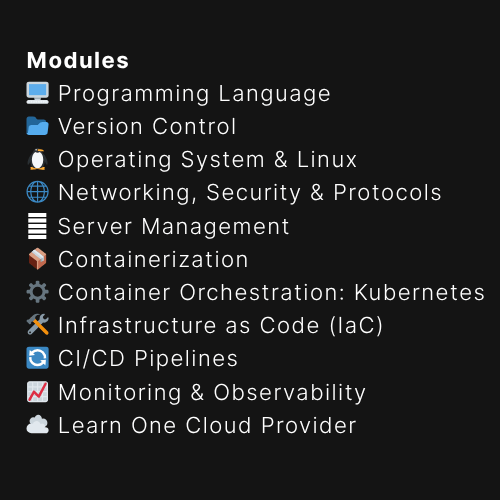
Free DevOps Learning Board for Absolute Beginners
11 core modules, curated content, and clear action steps - all in one interactive Notion board.
Python Roadmap for DevOps Engineer
You don’t have to write the complete software modules, but learning and understanding the language gives you the foundational knowledge required for writing the automation scripts.
If you’re starting your career as a DevOps engineer or switching your role, you might be thinking:
How much Python is required for DevOps?
As a DevOps engineer, you should learn Python basics syntax, control structures such as loops and if-else statements, and data structures such as lists, dictionaries, and tuples.
Learning this basic enables you to write simple Python scripts for log parsing or data manipulation.
Below is the roadmap for learning the basics of Python for DevOps:
Python installation & setup
Virtual environment
Variables
Data Types
Conditional statements - if-else
Control structure - loops
Data structure - lists, dictionaries, and tuples
Error handling
Basic input and output
Pattern matching - Regular expression
Package manager - PyPI
Top Python Modules for DevOps Automation
Python Modules are crucial for organizing the code and reusability. Python’s built-in modules provide ready-made solutions for the most common task.
Find the below list of the top Python DevOps modules.
OS - Operation System interface
subprocess - Sub-process management
shutil - High-level file operation
psutil - Process & system monitor
sys - System parameter & function
re - Regular expression operations
paramiko - SSH
requests - HTTP requests
pandas - Data analysis
boto3 - AWS Cloud SDK
google-cloud-sdk - Google Cloud SDK
azure-sdk - Azure Cloud SDK
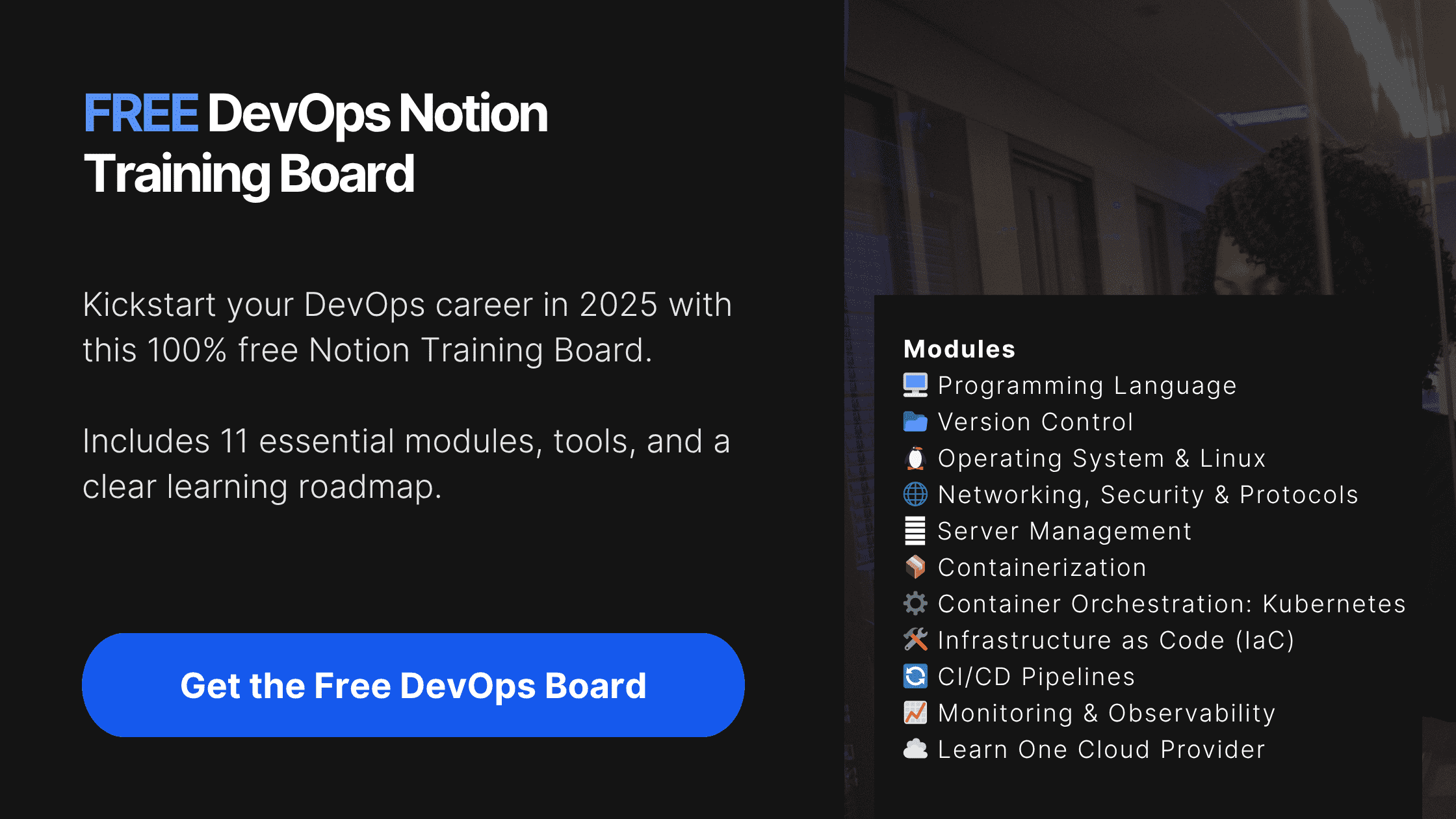
Kickstart Your DevOps Career
Get the free Notion training board that shows you exactly what to learn, in what order, with zero guesswork.
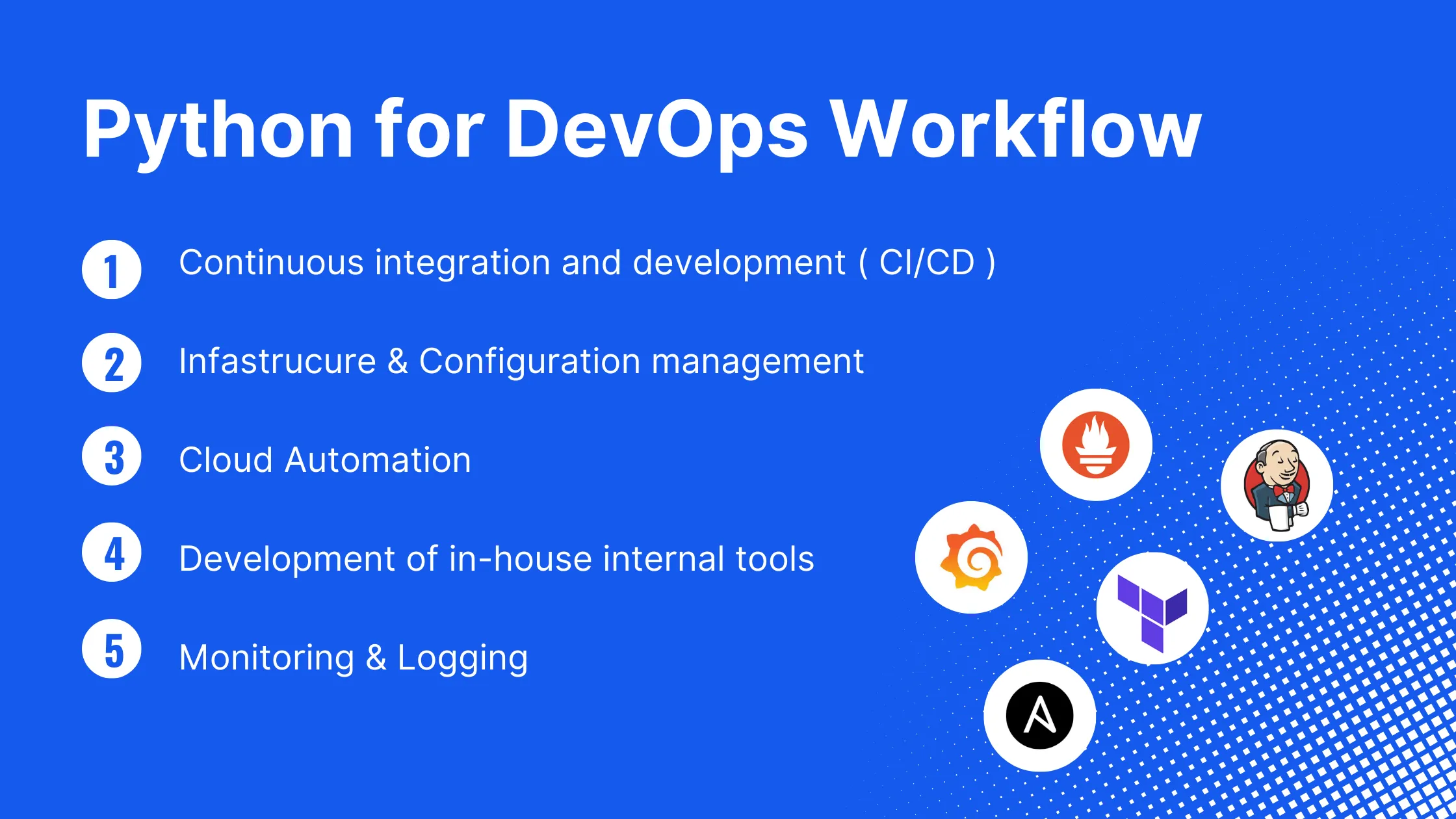
Python for DevOps Workflow
Python is used to optimize the DevOps automation and simplify the development workflow, such as writing the script to define the infrastructure as code (IaC), creating the CI/CD pipeline, and monitoring.
Python for DevOps Workflow
1. Continuous integration & development ( CI/CD )
CI/CD is a practice for automating the process of integration code change, testing, and deploying in production. Python is a flexible programming language well-suited for scripting and automation.
Many popular CI/CD tools, including Jenkins, GitLab CI, and Travis CI, support the integration of Python scripts.
Python’s rich ecosystem allows to use the of libraries and modules for writing complete custom solutions.
requests can be used for making HTTP requests to trigger the deployment
2. Infastrucure & Configuration management
Python support cross-platform execution enables the IaC script to be run across different environments consistently.
Most popular tools such as Ansible, Chef, and SaltStack are used with a combination of Python to write and execute the configuration management scripts.
3. Cloud Automation
Python is an excellent choice for writing cloud-based automation scripts.
boto3 is the most popular library for automation within the AWS (Amazon Web Services). Boto3 allows us to make the API call and interact with AWS services through Python scripts.
This integration is so powerful that it automates tasks such as running EC2 instances, managing the S3 buckets, and communicating with the SQS queue service. The possibilities are endless!
4. Development of in-house internal tools
Python is a versatile language for developing comprehensive in-house internal tools. Below are some of the examples.
Collaboration tools like chatbot and FAQs.
Report generator to analyze and provide insights.
Building powerful workflow for complex task breakdown.
5. Monitoring & Logging
By using Python in monitoring and logging, DevOps engineers can make tailored solutions such as:
Custom dashboards to track the system’s health and performance metrics.
Automated incident response with predefined workflow.
Python integrates with network monitoring tools like Nagios and Zabbix.
Log analysis and integration with the ELK (Elastisearch, Logstash, Kibana).
FAQ
Should I learn Go or Python for DevOps?
Both Golang and Python are the most popular choice for DevOps.
Python is easy to learn, with English-like syntax with extensive libraries and community support.
Golang provides strong performance and efficiency, especially for concurrent tasks. Well suited for the high-performance distributed system.
If you’re beginning your journey in programming and DevOps, Python is the best option.
Do DevOps need coding?
As a DevOps engineer, your primary role is not writing the code but improving the overall process, collaboration, and automation in the software development lifecycle.
Coding is essential for writing automation scripts or CI/CD pipelines.
Is Python useful for DevOps?
Python is versatile, easy to learn, and provides extensive libraries with active community support making it the most popular choice for the DevOps engineer.
Python is a scripting language well-suited for automation scripts, CICD workflow, and infrastructure management.
Free DevOps Learning Board for Absolute Beginners
11 core modules, curated content, and clear action steps - all in one interactive Notion board.
Conclusion
Mastering Python for DevOps gives you an advantage for starting your career as a DevOps Engineer. Python is a valuable skill for both new and experienced DevOps professionals.
With a solid foundation in Python basics, hands-on practice in automation, and knowledge about various modules set your path for your DevOps journey.
Start small and make boring and repetitive tasks automated.
Explore DevOps tools and join the community.
Stay curious and keep learning.
Kashyap Merai, a Certified Solution Architect and Public Cloud Specialist with over 8 years in IT. He helped startups in Real Estate, Media Streaming, and On-Demand industries launch successful public cloud projects.
Passionate about Space, Science, and Computers. He also mentors aspiring cloud engineers, shaping the industry's future.
Connect with him on LinkedIn to stay updated on cloud innovations.